
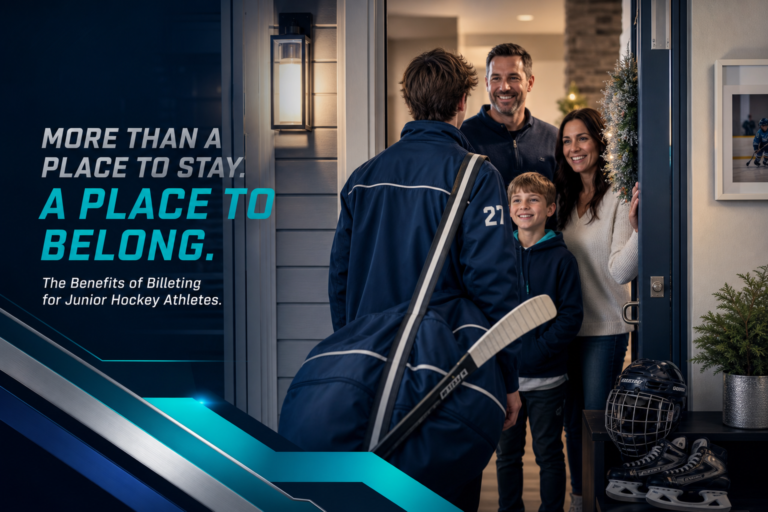
When a 16-year-old hockey player moves 800 miles from home to play junior hockey, the season doesn’t start at the first skate. It starts the moment they walk into a stranger’s house, try to remember which drawer is theirs, and figure out if this is going to feel like home or like a long, lonely year.
The billet family is the first thing that makes or breaks a young athlete’s transition. And most teams are still leaving it to chance.
What Billet Families Actually Do
A billet family isn’t just a bed and a meal plan. They are the infrastructure behind every successful young athlete who leaves home to chase a hockey career.
Here’s what that looks like in practice:
They absorb the emotional weight of transition. A teenager leaving home for the first time is navigating homesickness, performance pressure, new teammates, and a new city simultaneously. A billet family provides the daily normalcy that keeps an athlete grounded. A warm dinner, someone asking about practice, a quiet place to study. These aren’t small things. They are the foundation that lets a young player focus on development instead of survival.
They protect performance through routine. Elite junior hockey demands early mornings, late nights, and precise nutrition. A billet family enforces the structure that turns a talented player into a reliable one. Meals on time. Sleep schedules maintained. Equipment cared for. The details that separate players who thrive from players who burn out.
They become a second family. The best billet relationships outlast the season. Players return for summers. Families attend graduations. These bonds aren’t a bonus of the billet system, they’re the reason it works. A young athlete who feels genuinely cared for in their billet home plays with confidence, takes coaching feedback better, and recovers faster from the inevitable setbacks.
The Ripple Effect on the Ice
Teams that invest in billet housing quality see it show up in player development. Athletes who are well-supported off the ice are more consistent on it. They communicate better with coaches. They handle adversity without spiraling. They stay with the program instead of requesting trades or quitting.
Housing isn’t a logistics problem. It’s a retention and performance strategy.
Why the Current System Fails Teams
Most teams still match billets and athletes through word of mouth, personal networks, or a single volunteer coordinator. The result:
- Matches made on convenience rather than compatibility
- Vetting that ranges from thorough to nonexistent
- No centralized system for monitoring housing quality or athlete wellbeing
- Last-minute scrambling when a billet falls through mid-season
- Athletes placed in situations that hurt their development and your team’s reputation
When a billet placement goes wrong, everyone pays. The athlete loses months of development. The family burns out. The team loses a player and gains a reputational problem in the recruiting pipeline.
There Is a Better Way
BilletMatch was built for this exact problem. It’s a platform designed to connect young athletes with verified billet families through a structured matching process that considers compatibility, not just availability.
For teams, it means:
– Vetted billet families with completed profiles and background verification
– Matching based on location, lifestyle, and compatibility factors
– A centralized system to manage and monitor housing throughout the season
– Less time spent on logistics, more time spent on development
For athletes and families, it means confidence. Confidence that the home they’re walking into has been properly screened. That someone is monitoring the arrangement. That if something isn’t working, there’s a system to address it before it becomes a problem.
The Billet Relationship Is the Foundation
Every great junior hockey career has a billet family story behind it. The family that drove the extra mile for late practices. The parents who treated the player like their own kid. The home that felt safe enough to fail in, and good enough to grow in.
Those relationships don’t happen by accident. They happen when teams take housing seriously as part of their player development strategy.
BilletMatch helps teams do exactly that. Not by replacing the human connection, but by building the system around it that makes great matches possible and bad ones preventable.
If you’re running a team and you’re still managing billet housing through spreadsheets and phone calls, it’s worth a conversation. The athletes in your program deserve better than good intentions.
Start your free trial at billetmatch.com or share this with a coach, team manager, or hockey parent who needs to read it.


Leave a Reply